Dinosaur Names & Facts for Kids
Last updated: November 12, 2026 by Sara
This collection of dinosaur names includes information about well-known dinosaurs like the Tyrannosaurus Rex as well as the lesser-known little guys like the Compsognathus.
With so many different types of dinosaurs, it’s hard to know where to begin! Some are familiar favorites, while others have unusual names and features that might surprise you. You’ll find out how to pronounce their names, what those names mean, how big they were, what they ate, and where their fossils have been found.
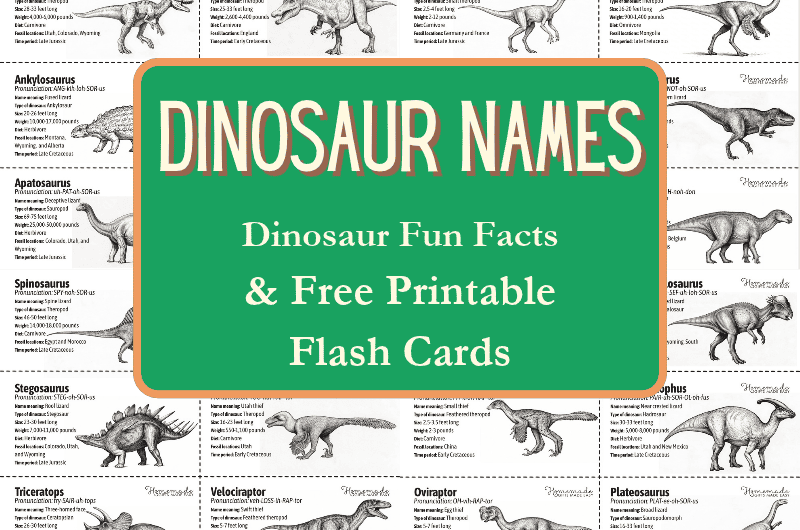
Jump directly to our free printable dinosaur names flash cards!
Dinosaur Names A-Z
I’ve always found it fascinating to imagine dinosaurs roaming the Earth millions of years ago, and I think they spark just as much curiosity in adults as they do in kids. When I was teaching, one of our most popular field trips, for both students and chaperones, was visiting a site where we could see dinosaur fossils in their natural setting.
It was hard not to get caught up in all the questions! What did their names mean? How big were these creatures? What did they eat?
Before you dive into the list, here are a few things you should know!
-
Types of Dinosaurs:
- Theropods (two-legged dinosaurs)
- Sauropods (large, long-necked plant-eaters)
- Sauropodomorphs (sauropods and their earlier relatives)
- Ornithopods (plant-eaters that often walked on two legs)
- Hadrosaurs (duck-billed dinosaurs)
- Ankylosaurs (armored dinosaurs)
- Stegosaurs (dinosaurs with plates along their backs)
- Ceratopsians (beaked dinosaurs)
- Pachycephalosaurs (dinosaurs with thick, dome-shaped skulls)
-
Diet:
- Carnivores eat meat
- Herbivores eat plants
- Omnivores eat both
-
Prehistoric Time Periods:
- The Triassic (252-201 million years ago) - dinosaurs first appeared
- The Jurassic (201-145 million years ago) - many long-necked dinosaurs thrived
- The Cretaceous (145-66 million years ago) - ended with the extinction of non-avian dinosaurs
- All sizes and weights are approximate. Locations refer to places where fossils have been discovered.
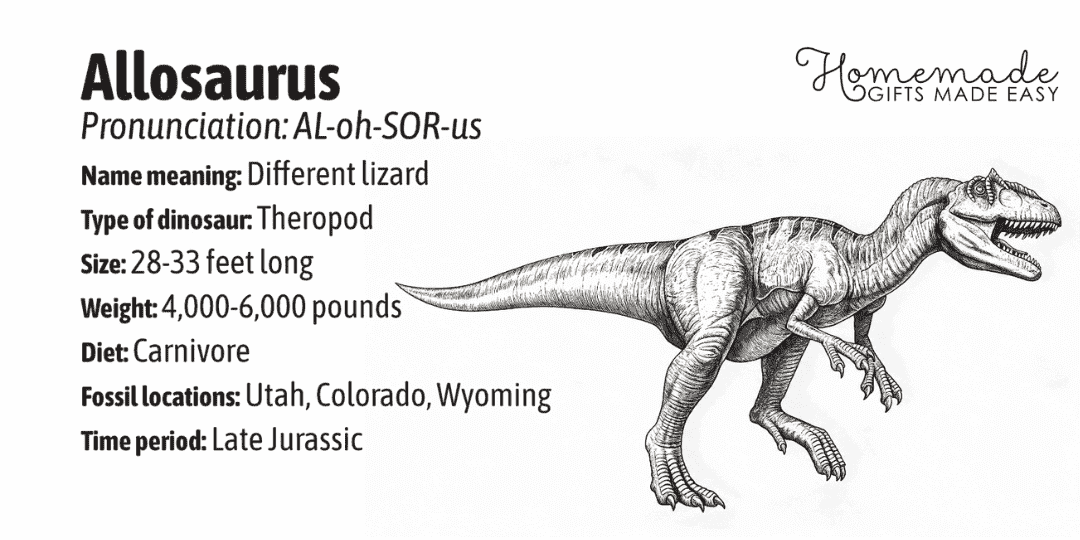
Allosaurus
- Pronunciation: AL-oh-SOR-us
- Name meaning: Different lizard
- Type of dinosaur: Theropod
- Size: 28-33 feet long
- Weight: 4,000-6,000 pounds
- Diet: Carnivore
- Fossil locations: Utah, Colorado, Wyoming
- Time period: Late Jurassic
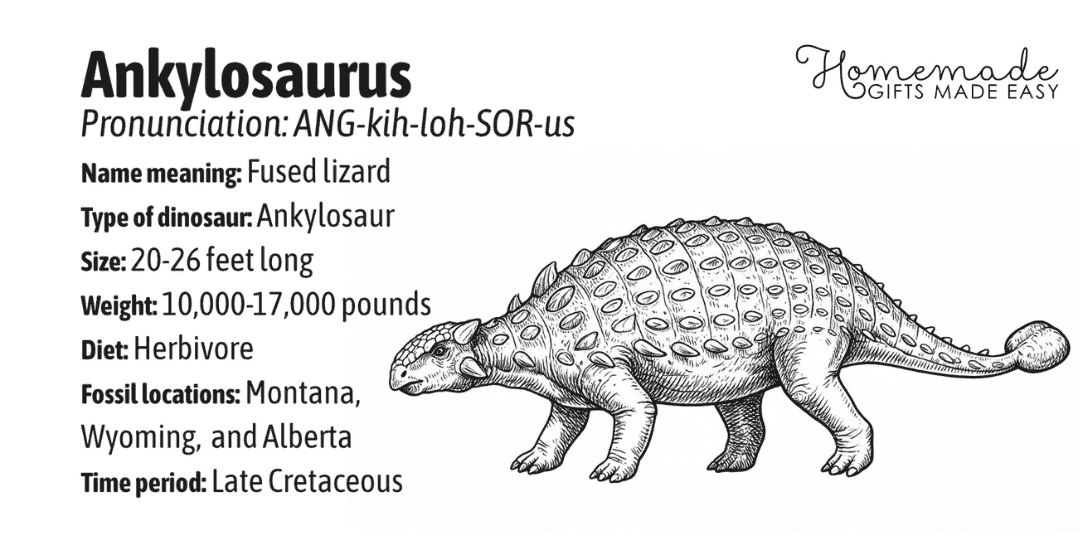
Ankylosaurus
- Pronunciation: ANG-kih-loh-SOR-us
- Name meaning: Fused lizard
- Type of dinosaur: Ankylosaur
- Size: 20-26 feet long
- Weight: 10,000-17,000 pounds
- Diet: Herbivore
- Fossil locations: Montana, Wyoming, and Alberta
- Time period: Late Cretaceous
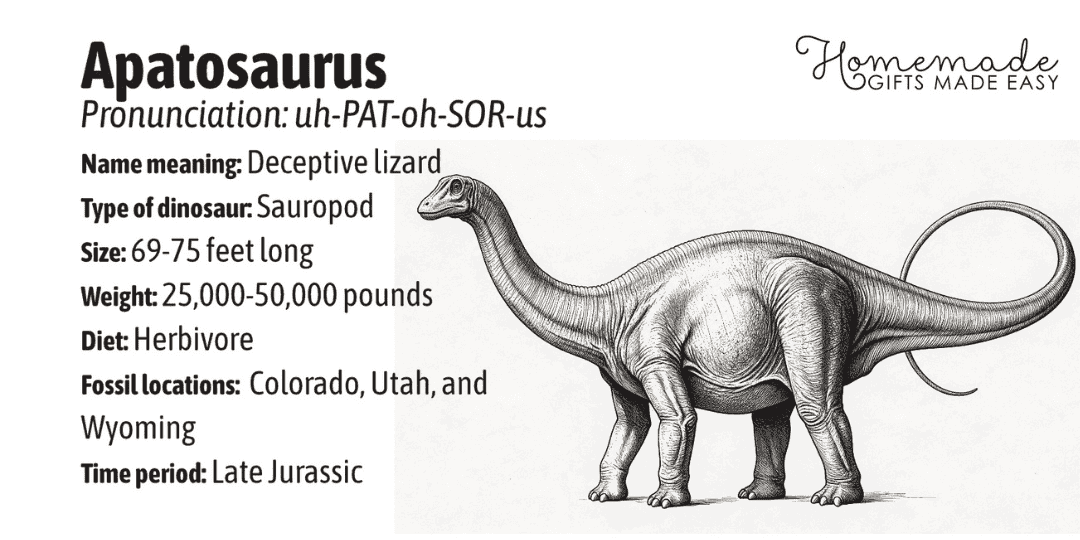
Apatosaurus
- Pronunciation: uh-PAT-oh-SOR-us
- Name meaning: Deceptive lizard
- Type of dinosaur: Sauropod
- Size: 69-75 feet long
- Weight: 25,000-50,000 pounds
- Diet: Herbivore
- Fossil locations: Colorado, Utah, and Wyoming
- Time period: Late Jurassic
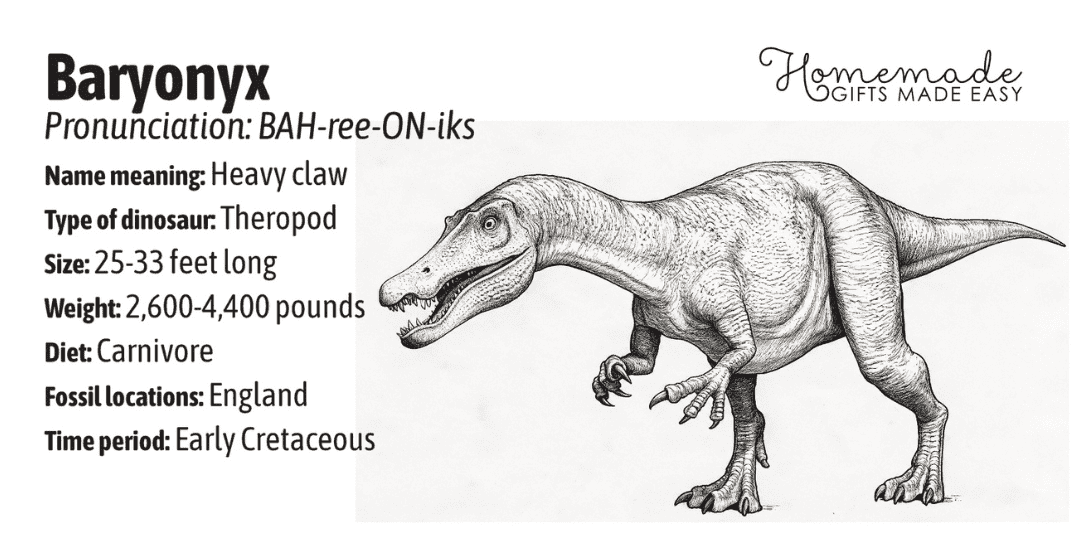
Baryonyx
- Pronunciation: BAH-ree-ON-iks
- Name meaning: Heavy claw
- Type of dinosaur: Theropod
- Size: 25-33 feet long
- Weight: 2,600-4,400 pounds
- Diet: Carnivore
- Fossil locations: England
- Time period: Early Cretaceous
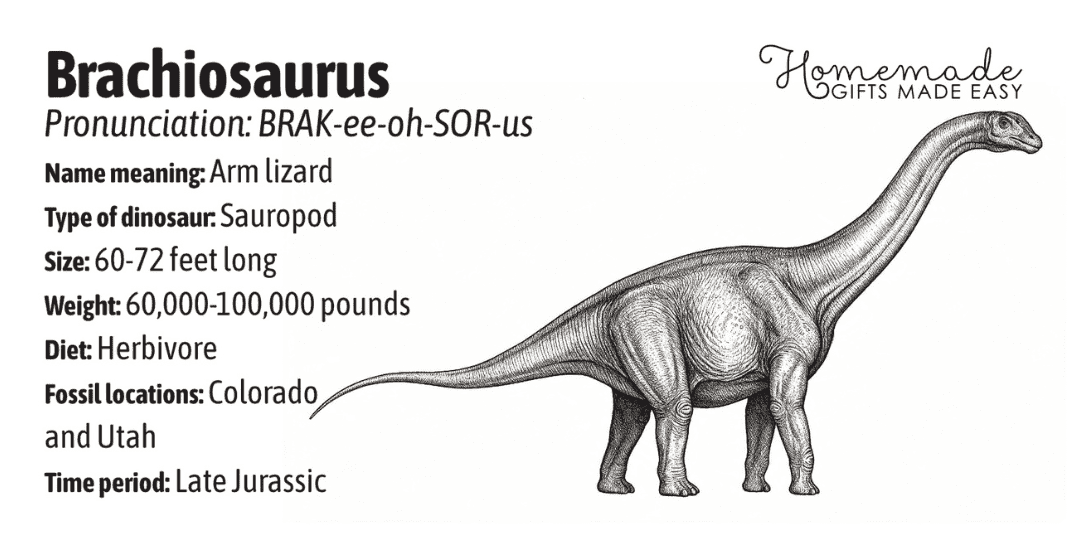
Brachiosaurus
- Pronunciation: BRAK-ee-oh-SOR-us
- Name meaning: Arm lizard
- Type of dinosaur: Sauropod
- Size: 60-72 feet long
- Weight: 60,000-100,000 pounds
- Diet: Herbivore
- Fossil locations: Colorado and Utah
- Time period: Late Jurassic
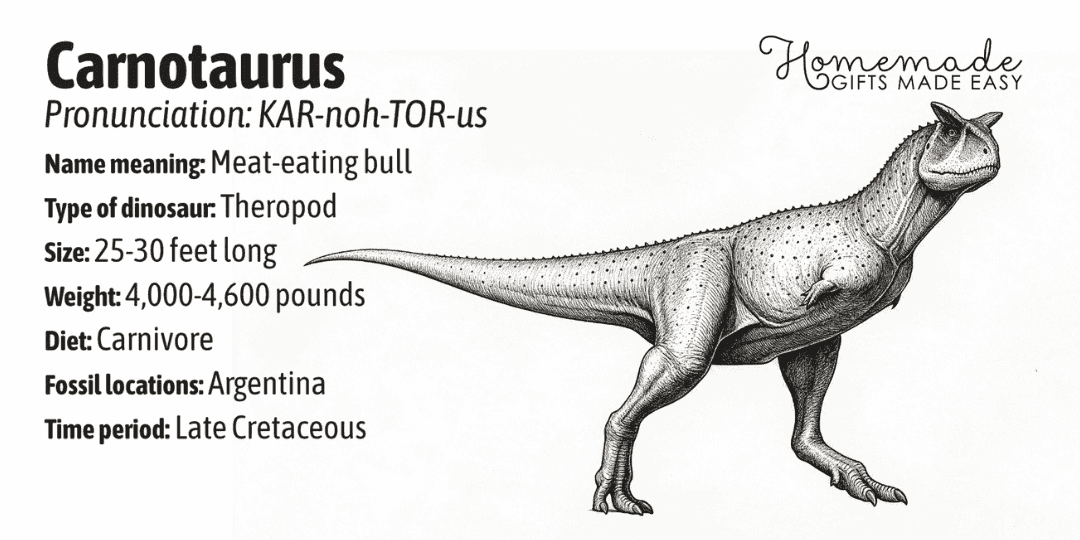
Carnotaurus
- Pronunciation: KAR-noh-TOR-us
- Name meaning: Meat-eating bull
- Type of dinosaur: Theropod
- Size: 25-30 feet long
- Weight: 4,000-4,600 pounds
- Diet: Carnivore
- Fossil locations: Argentina
- Time period: Late Cretaceous
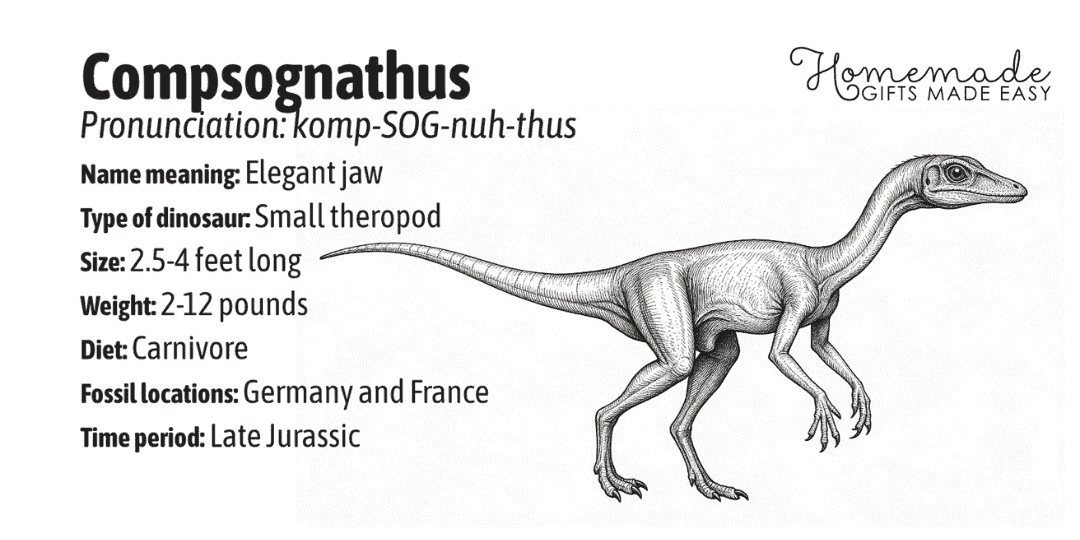
Compsognathus
- Pronunciation: komp-SOG-nuh-thus
- Name meaning: Elegant jaw
- Type of dinosaur: Small theropod
- Size: 2.5-4 feet long
- Weight: 2-12 pounds
- Diet: Carnivore
- Fossil locations: Germany and France
- Time period: Late Jurassic
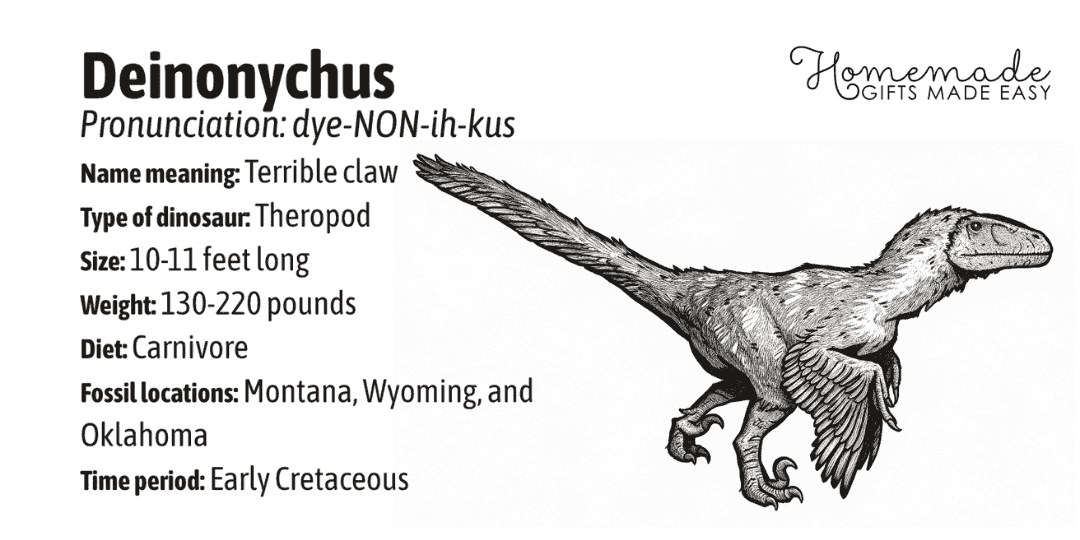
Deinonychus
- Pronunciation: dye-NON-ih-kus
- Name meaning: Terrible claw
- Type of dinosaur: Theropod
- Size: 10-11 feet long
- Weight: 130-220 pounds
- Diet: Carnivore
- Fossil locations: Montana, Wyoming, and Oklahoma
- Time period: Early Cretaceous
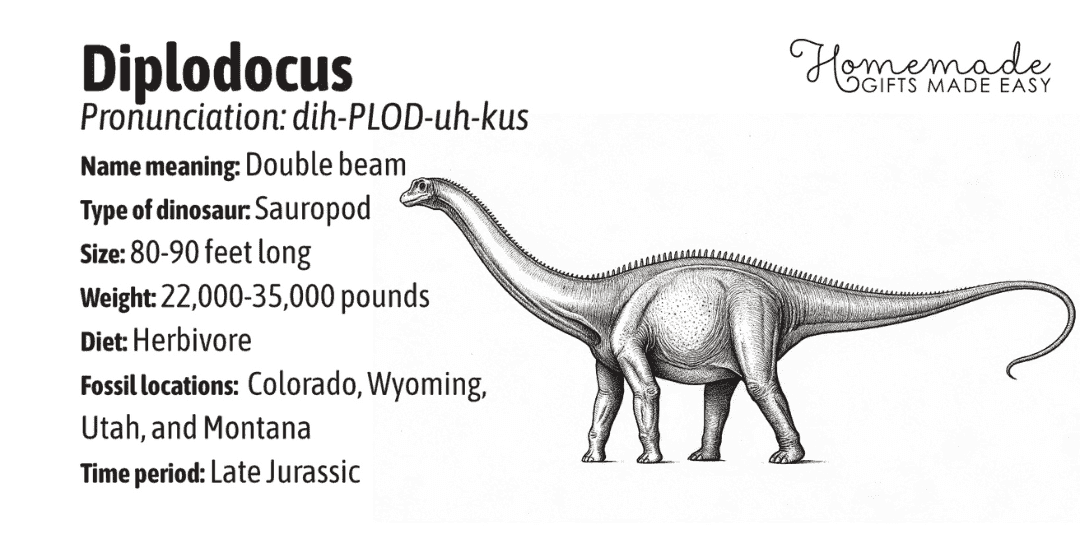
Diplodocus
- Pronunciation: dih-PLOD-uh-kus
- Name meaning: Double beam
- Type of dinosaur: Sauropod
- Size: 80-90 feet long
- Weight: 22,000-35,000 pounds
- Diet: Herbivore
- Fossil locations: Colorado, Wyoming, Utah, and Montana
- Time period: Late Jurassic
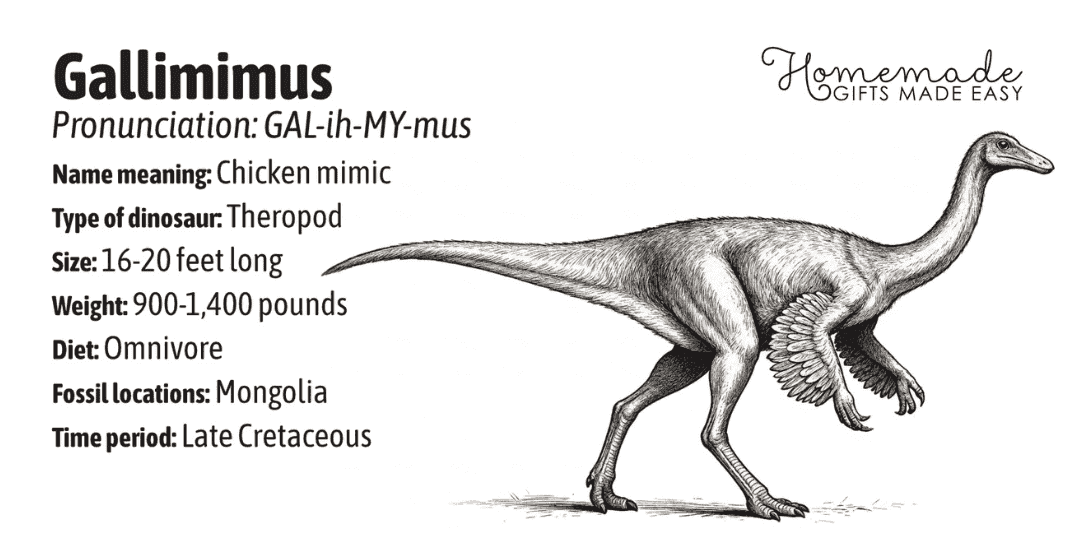
Gallimimus
- Pronunciation: GAL-ih-MY-mus
- Name meaning: Chicken mimic
- Type of dinosaur: Theropod
- Size: 16-20 feet long
- Weight: 900-1,400 pounds
- Diet: Omnivore
- Fossil locations: Mongolia
- Time period: Late Cretaceous
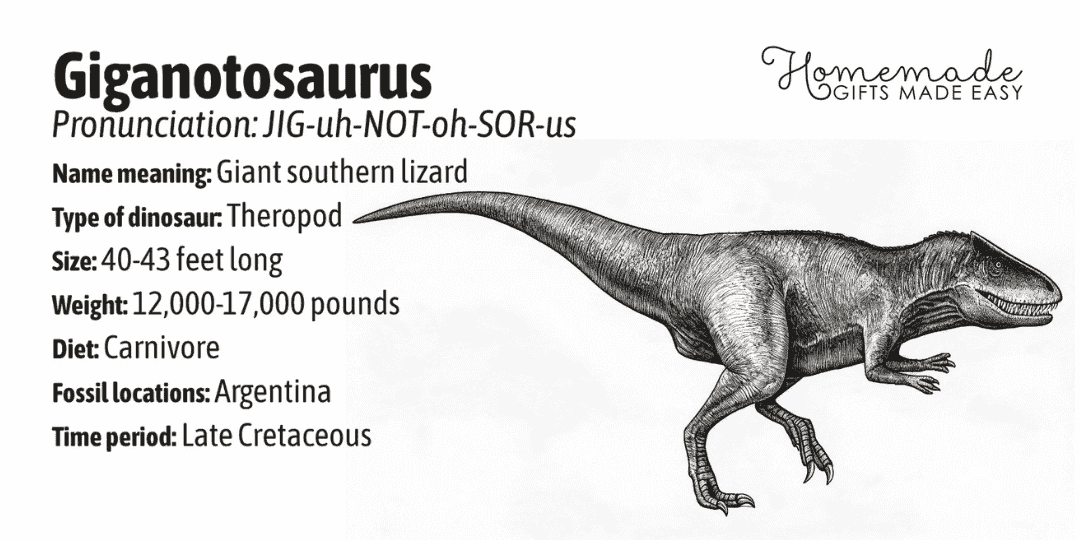
Giganotosaurus
- Pronunciation: JIG-uh-NOT-oh-SOR-us
- Name meaning: Giant southern lizard
- Type of dinosaur: Theropod
- Size: 40-43 feet long
- Weight: 12,000-17,000 pounds
- Diet: Carnivore
- Fossil locations: Argentina
- Time period: Late Cretaceous
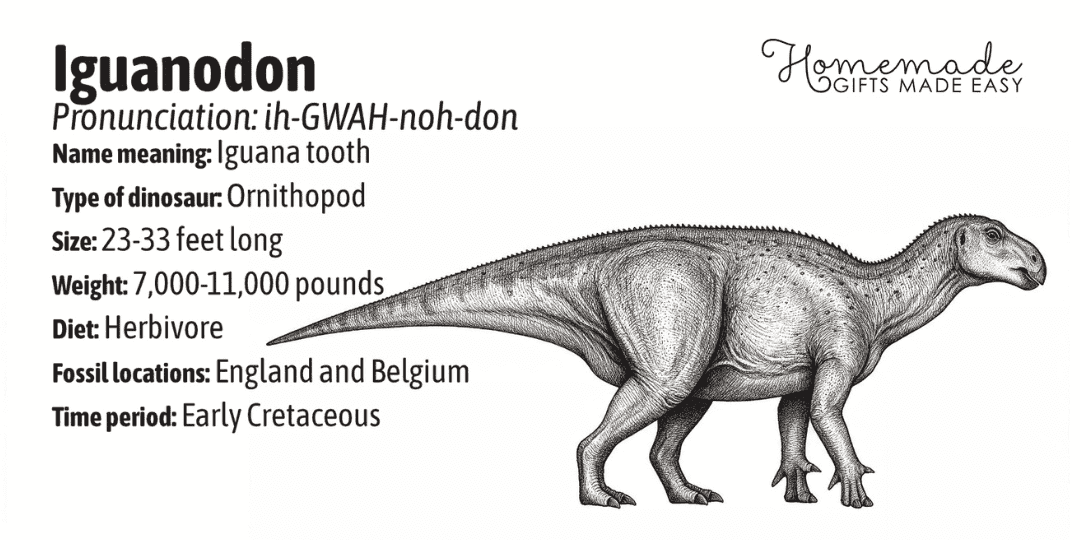
Iguanodon
- Pronunciation: ih-GWAH-noh-don
- Name meaning: Iguana tooth
- Type of dinosaur: Ornithopod
- Size: 26-33 feet long
- Weight: 7,000-11,000 pounds
- Diet: Herbivore
- Fossil locations: England and Belgium
- Time period: Early Cretaceous
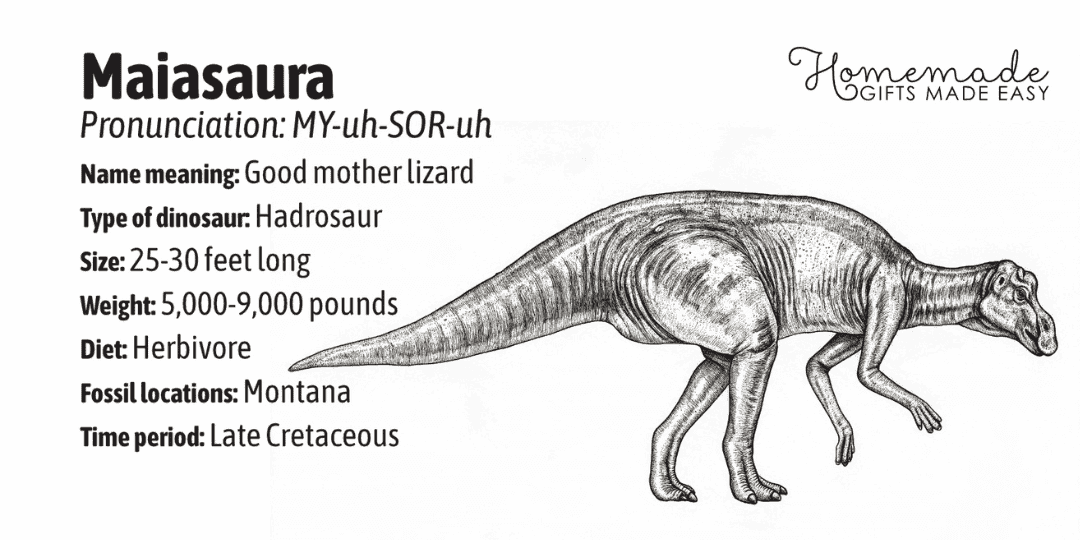
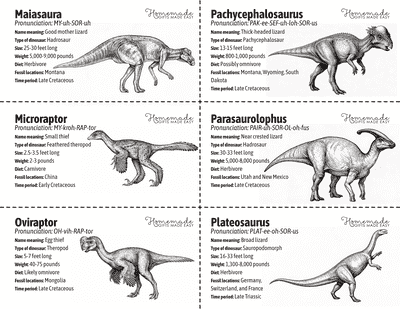
Maiasaura
- Pronunciation: MY-uh-SOR-uh
- Name meaning: Good mother lizard
- Type of dinosaur: Hadrosaur
- Size: 25-30 feet long
- Weight: 5,000-9,000 pounds
- Diet: Herbivore
- Fossil locations: Montana
- Time period: Late Cretaceous
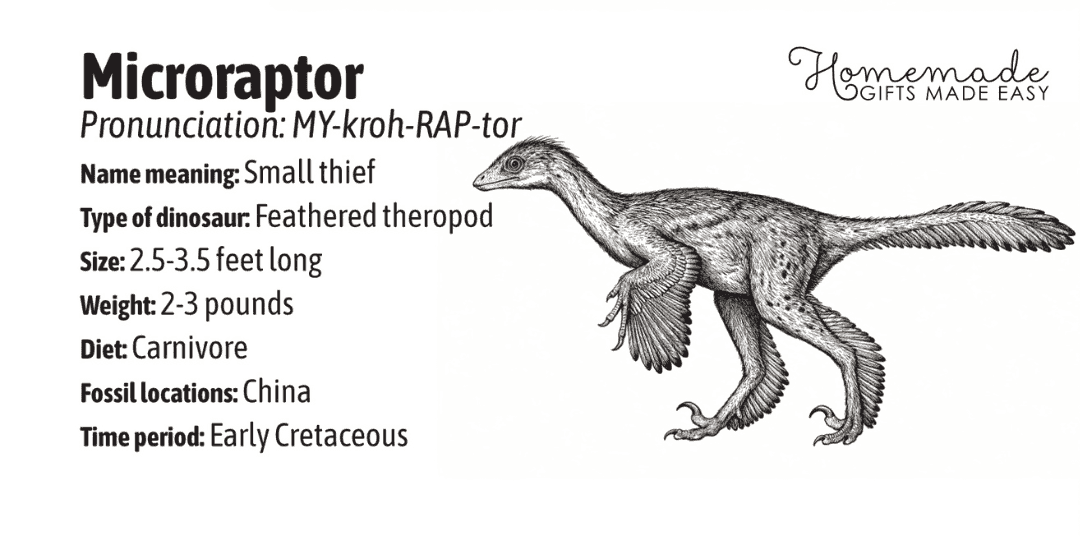
Microraptor
- Pronunciation: MY-kroh-RAP-tor
- Name meaning: Small thief
- Type of dinosaur: Feathered theropod
- Size: 2.5-3.5 feet long
- Weight: 2-3 pounds
- Diet: Carnivore
- Fossil locations: China
- Time period: Early Cretaceous
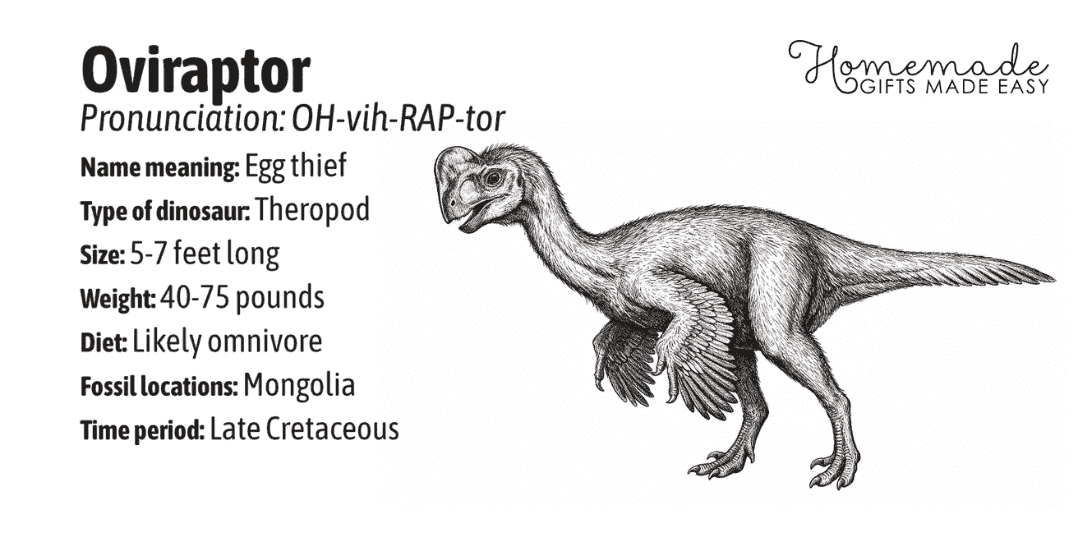
Oviraptor
- Pronunciation: OH-vih-RAP-tor
- Name meaning: Egg thief
- Type of dinosaur: Theropod
- Size: 5-7 feet long
- Weight: 40-75 pounds
- Diet: Likely omnivore
- Fossil locations: Mongolia
- Time period: Late Cretaceous
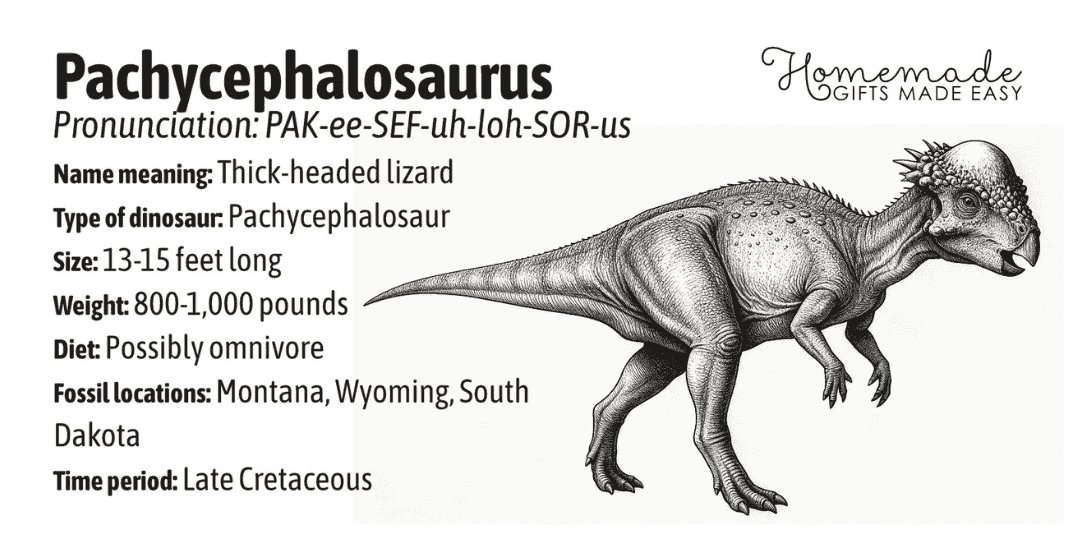
Pachycephalosaurus
- Pronunciation: PAK-ee-SEF-uh-loh-SOR-us
- Name meaning: Thick-headed lizard
- Type of dinosaur: Pachycephalosaur
- Size: 13-15 feet long
- Weight: 800-1,000 pounds
- Diet: Possibly omnivore
- Fossil locations: Montana, Wyoming, South Dakota
- Time period: Late Cretaceous
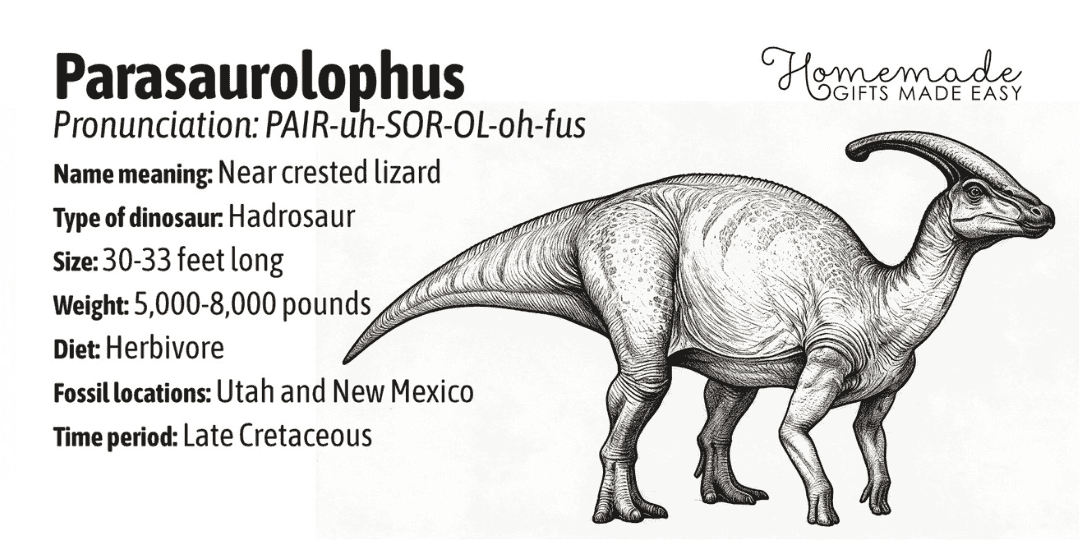
Parasaurolophus
- Pronunciation: PAIR-uh-SOR-OL-oh-fus
- Name meaning: Near crested lizard
- Type of dinosaur: Hadrosaur
- Size: 30-33 feet long
- Weight: 5,000-8,000 pounds
- Diet: Herbivore
- Fossil locations: Utah, New Mexico, and Alberta
- Time period: Late Cretaceous
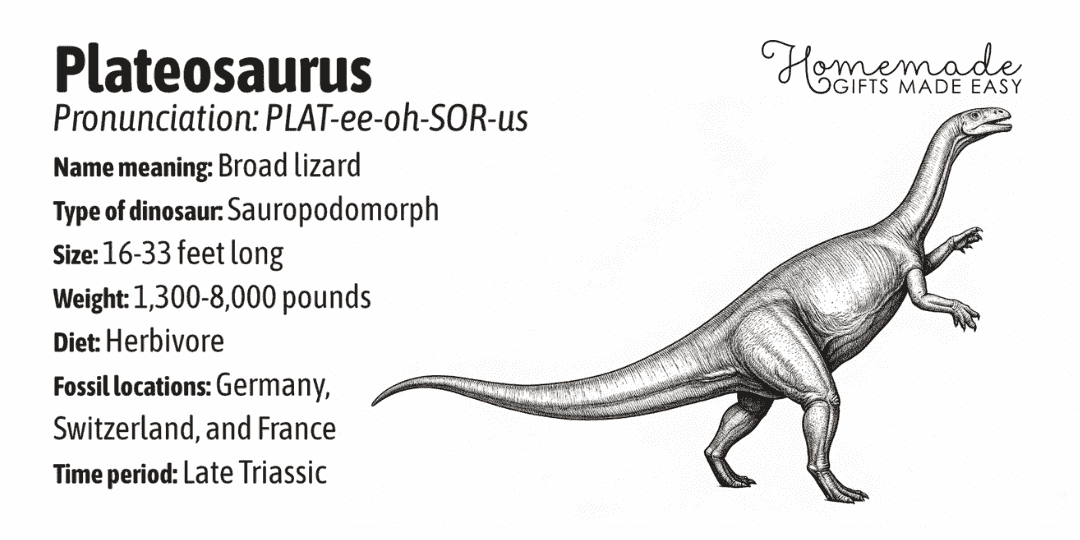
Plateosaurus
- Pronunciation: PLAT-ee-oh-SOR-us
- Name meaning: Broad lizard
- Type of dinosaur: Sauropodomorph
- Size: 16-33 feet long
- Weight: 1,300-8,000 pounds
- Diet: Herbivore
- Fossil locations: Germany, Switzerland, and France
- Time period: Late Triassic
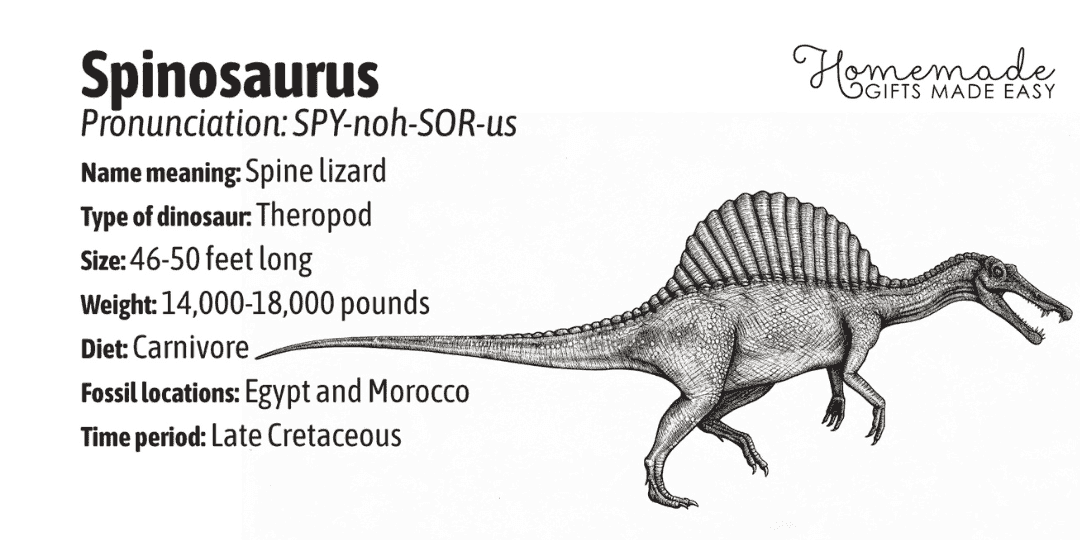
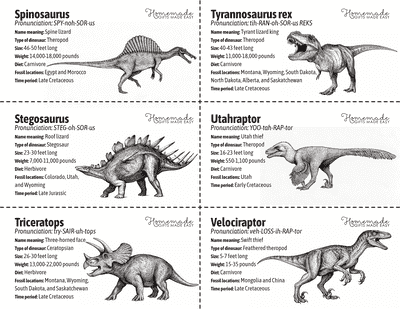
Spinosaurus
- Pronunciation: SPY-noh-SOR-us
- Name meaning: Spine lizard
- Type of dinosaur: Theropod
- Size: 46-50 feet long
- Weight: 14,000-18,000 pounds
- Diet: Carnivore
- Fossil locations: Egypt and Morocco
- Time period: Late Cretaceous
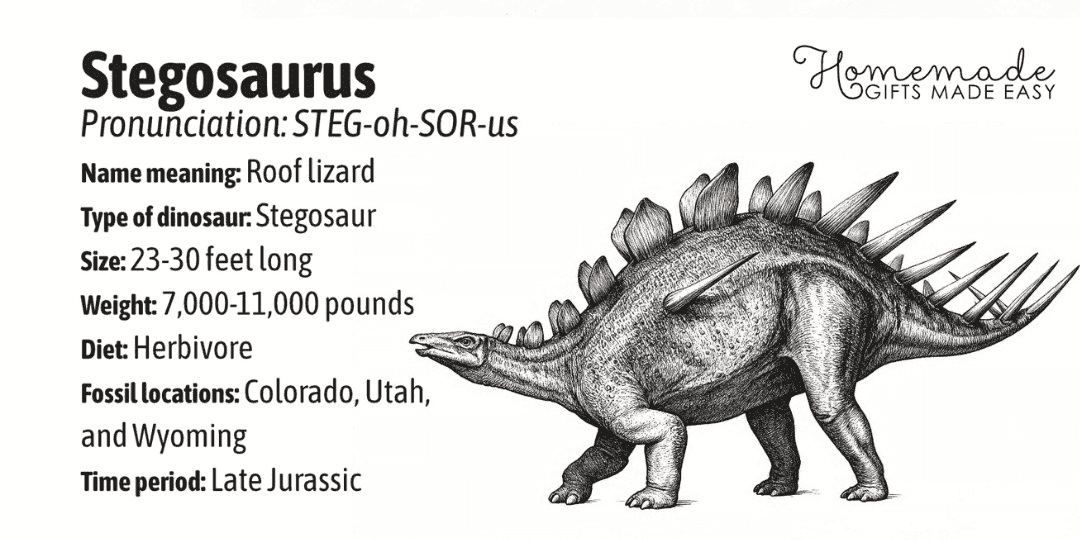
Stegosaurus
- Pronunciation: STEG-oh-SOR-us
- Name meaning: Roof lizard
- Type of dinosaur: Stegosaur
- Size: 23-30 feet long
- Weight: 7,000-11,000 pounds
- Diet: Herbivore
- Fossil locations: Colorado, Utah, and Wyoming
- Time period: Late Jurassic
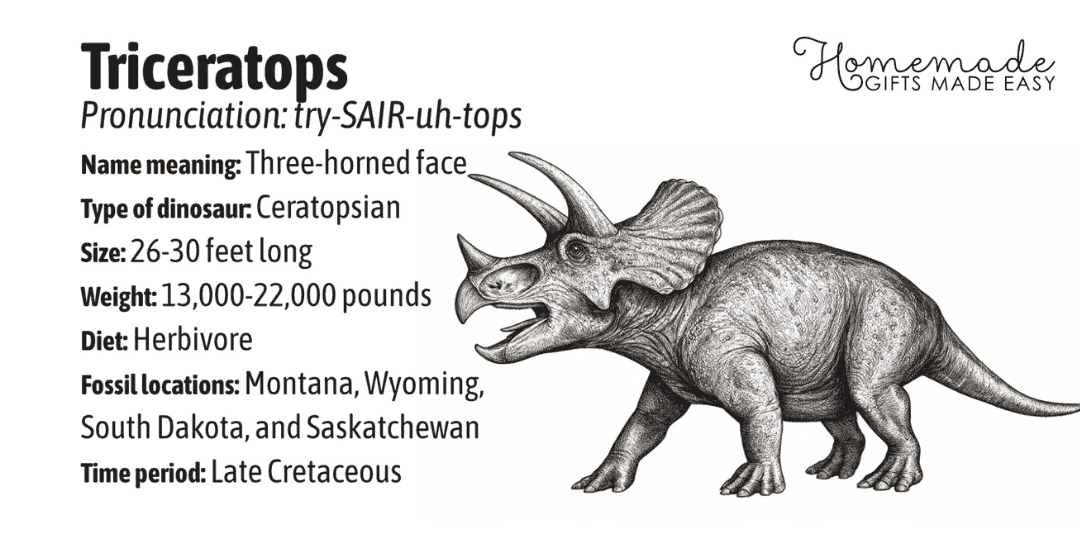
Triceratops
- Pronunciation: try-SAIR-uh-tops
- Name meaning: Three-horned face
- Type of dinosaur: Ceratopsian
- Size: 26-30 feet long
- Weight: 13,000-22,000 pounds
- Diet: Herbivore
- Fossil locations: Montana, Wyoming, South Dakota, and Saskatchewan
- Time period: Late Cretaceous
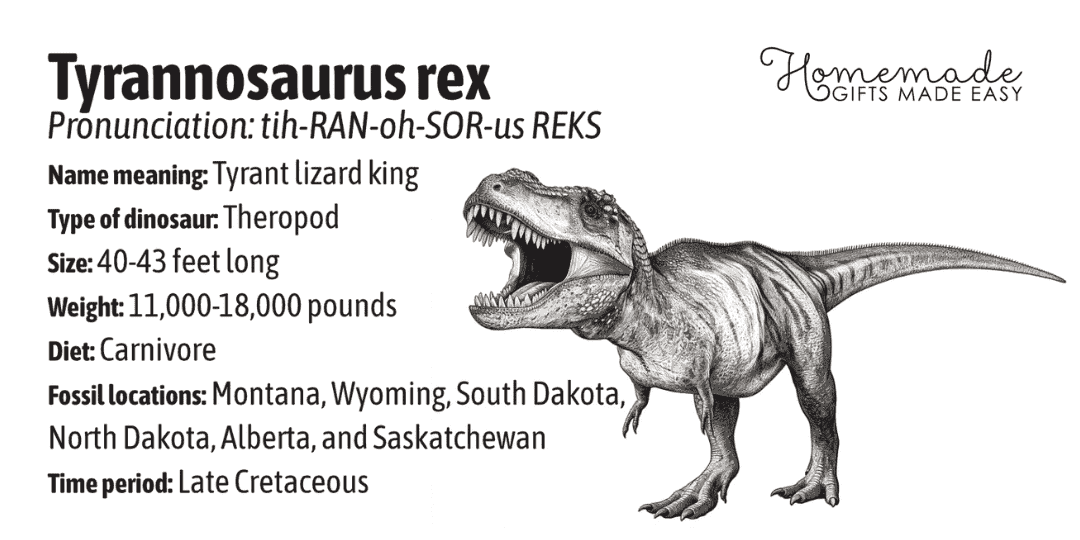
Tyrannosaurus rex
- Pronunciation: tih-RAN-oh-SOR-us REKS
- Name meaning: Tyrant lizard king
- Type of dinosaur: Theropod
- Size: 40-43 feet long
- Weight: 11,000-18,000 pounds
- Diet: Carnivore
- Fossil locations: Montana, Wyoming, South Dakota, North Dakota, Alberta, and Saskatchewan
- Time period: Late Cretaceous
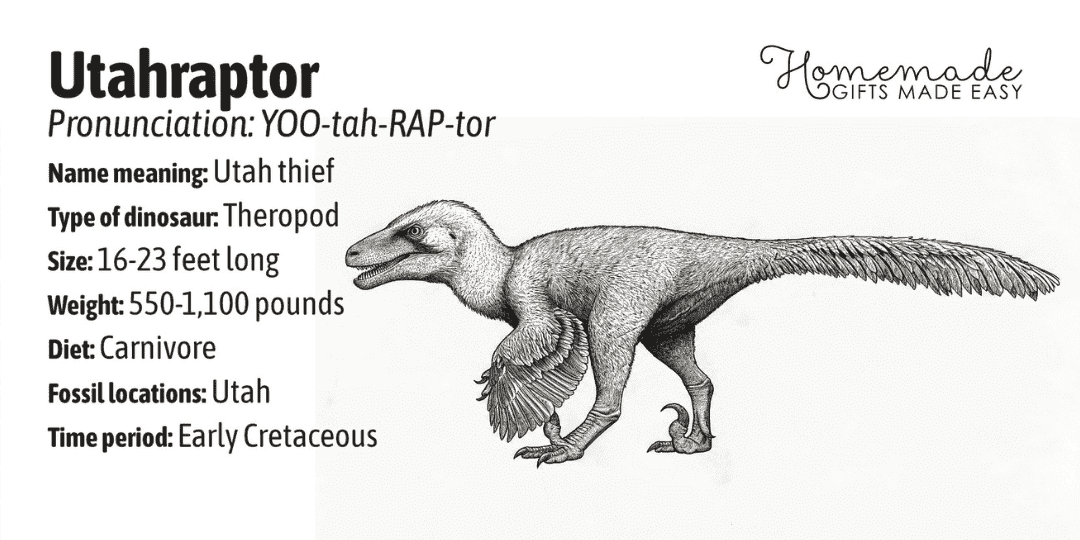
Utahraptor
- Pronunciation: YOO-tah-RAP-tor
- Name meaning: Utah thief
- Type of dinosaur: Theropod
- Size: 16-23 feet long
- Weight: 550-1,100 pounds
- Diet: Carnivore
- Fossil locations: Utah
- Time period: Early Cretaceous
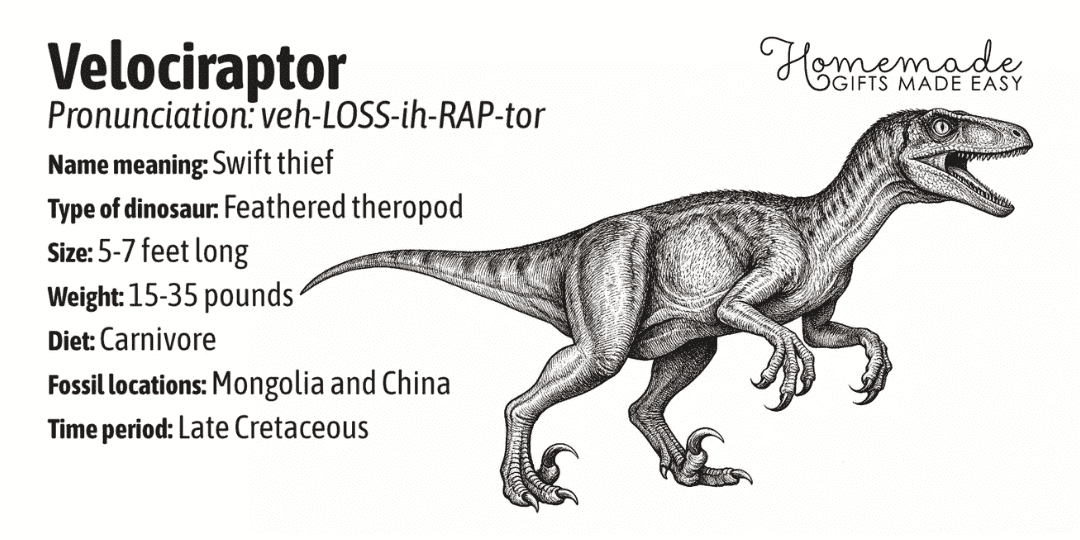
Velociraptor
- Pronunciation: veh-LOSS-ih-RAP-tor
- Name meaning: Swift thief
- Type of dinosaur: Feathered theropod
- Size: 5-7 feet long
- Weight: 15-35 pounds
- Diet: Carnivore
- Fossil locations: Mongolia and China
- Time period: Late Cretaceous
Printable Dinosaur Names With Pictures and Stats
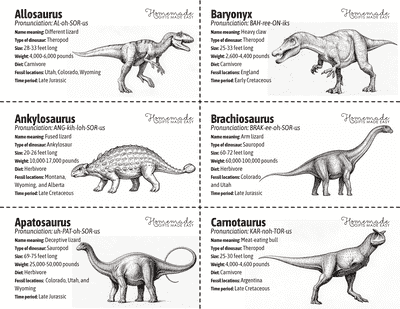
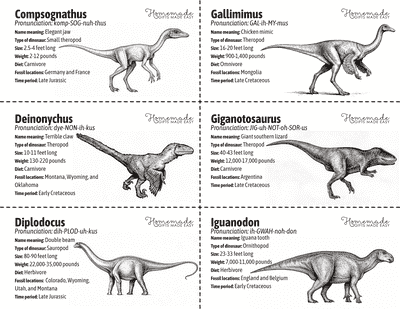
Get to know your favorite dinosaurs with these printable dinosaur names, pictures, and stats! Print the pages to keep as a handy dinosaur reference guide, or grab some scissors and cut out each dinosaur to create your own flashcards or trading cards.
Challenge a friend to a dinosaur trivia contest, compare the sizes of different dinosaurs, or see how many names you can remember without peeking at the answers!
These printables are for personal, non-commercial use only.
More Fun Learning Tools!
- Dinosaur Coloring Pages
- T-Rex Coloring Pages
- Trivia Questions for Kids
- History Trivia Questions
- Science Trivia Questions
- Animal Trivia
- Geography Trivia
- Fun Facts
- Riddles for Kids
- Brain Teasers