Behavior Chart for Kids
Last updated: October 21, 2026 by the Homemade Gifts Calendars Team
For some kids, tracking with a daily behavior chart can make a big difference in things like following directions and staying on task. When I used them in the classroom, I'd start the morning by choosing one or two goals to focus on, then check in throughout the day about how things were going. At the end of the day, we’d look back at their progress together, celebrate what went well, and reflect on what they could try differently the next day.
Behavior charts can be just as useful at home as they are in the classroom. They give kids a visual reminder of what they’re working toward while helping parents, teachers, and caregivers recognize positive choices and address behaviors that need a little more attention. The goal isn’t perfection, but helping kids build accountability, recognize how their actions affect others, and understand what they can do differently next time.
Printable Behavior Charts
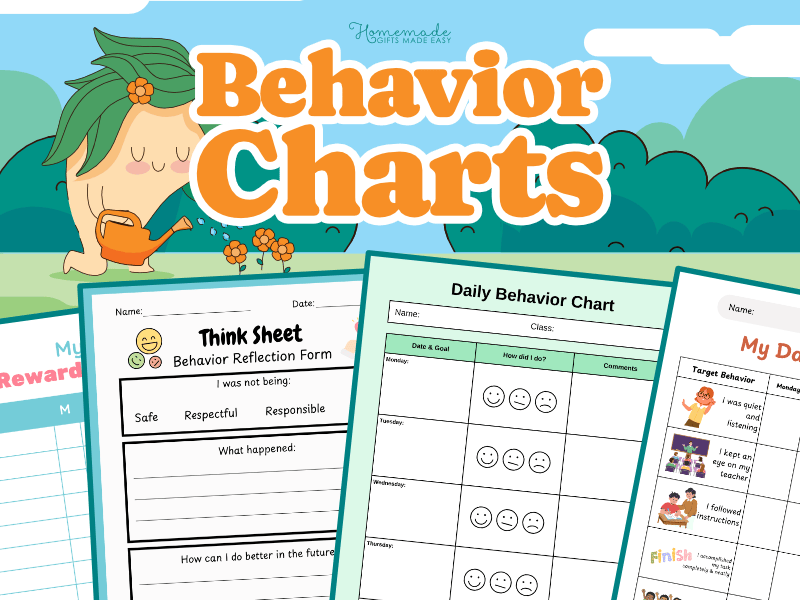
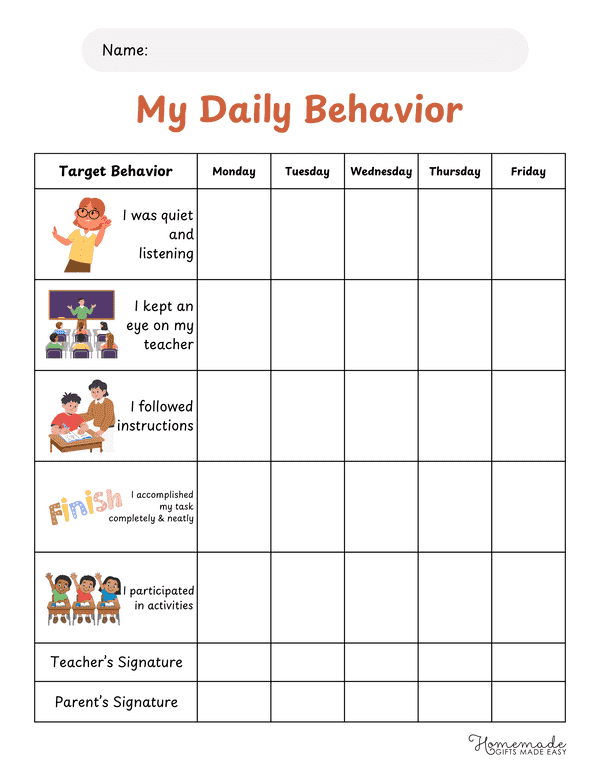
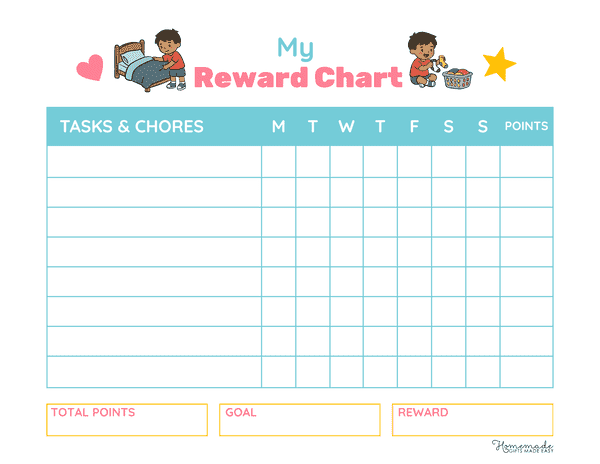
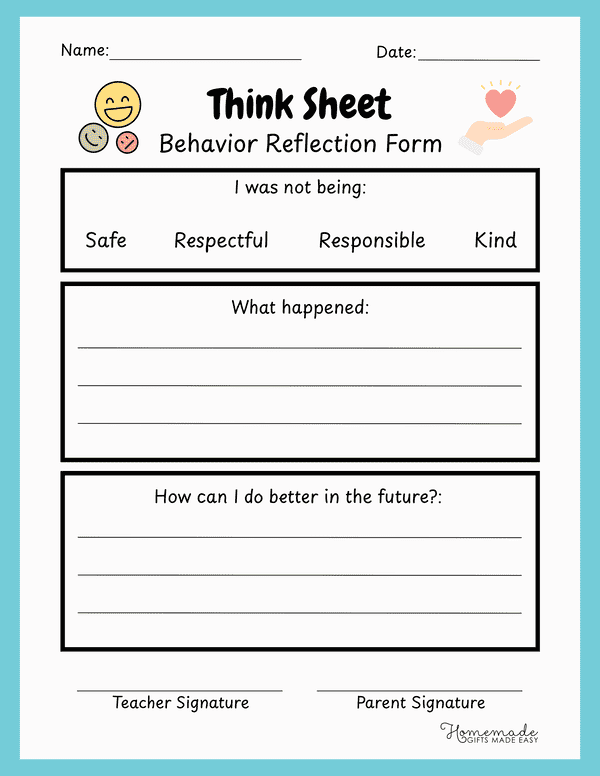
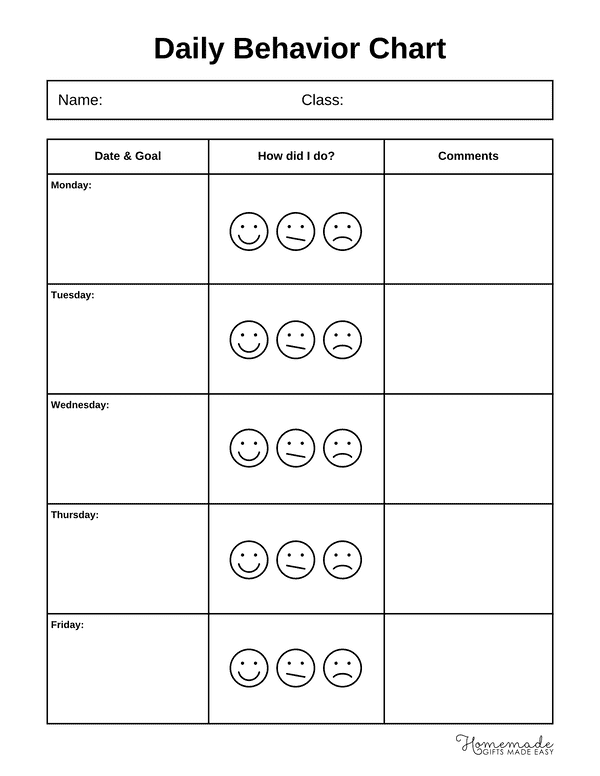
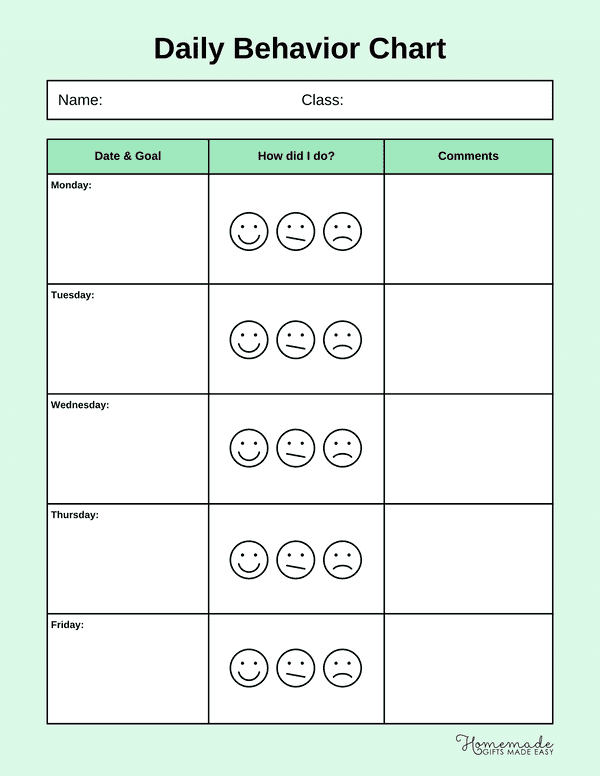
These printable behavior charts offer a few different ways to help kids track their progress and reflect on their choices. You’ll find daily and weekly sticker charts and reward charts for setting goals and monitoring progress, along with reflection sheets that encourage kids to think about their actions and how they can make better choices moving forward.
When and How to Use Behavior Charts for Kids
Each year in the classroom, I had students who struggled with things like following directions, staying on task, or keeping their hands to themselves. I like that behavior charts give students a chance to take responsibility for choices without making the entire conversation about what they had done wrong.
Set Clear and Attainable Goals
Behavior charts don’t have to be something you pull out only when a child is having a hard time. They’re also a way to recognize the positive choices kids are already making!
- Start by choosing one or two realistic goals, like using kind words or following directions the first time. A good behavior chart gives kids something specific to work toward and a chance to see how far they’ve come.
- In this case, it's good to practice consistency by iterating the same goals each day.
- Sometimes it is simply a matter of helping a child build confidence in a skill they are still learning.
- Start by choosing one or two realistic goals, like using kind words or following directions the first time.
- For younger kids, a chart with smiley faces or stickers can help them see their progress.
- Older kids may be ready for a point system, where they track how they’re doing by adding up points.
Find Appropriate Motivation and Rewards
Motivation is another big piece of the puzzle, and it doesn’t always have to involve earning a prize. After years of teaching, I’ve seen how much recognition can make a child beam, especially when it’s something they are working hard to improve!
- I always tried to point out specific moments when students made a good choice, even if the rest of the day hadn’t gone quite as planned.
- Checking in with students at the beginning and end of the day also gave us a chance to reflect on what went well and what was challenging. Those conversations were just as important as the behavior chart itself.
Help Kids Understand the Role Feelings Play in Their Behavior
There are many types of emotions, including comfortable feelings like 'happiness' and uncomfortable feelings like 'frustration,' along with plenty of feelings in between.
You may have heard of the 27 emotions, which comes from research identifying 27 distinct categories of emotional experience, but most people don’t need to learn them all at once. A feelings chart can help start with broader emotions and gradually find more specific words for what they’re experiencing.
Of course, there will still be difficult days. Kids are learning how to manage their emotions, communicate their needs, and handle situations that don’t go their way. In my classroom, I made expectations clear from the beginning, especially around things like hitting or hurting others. Those behaviors needed to be addressed right away, but I also wanted students to know that one poor choice didn’t define who they were or erase the good choices they had made.
With behavior charts, I was careful never to take away stickers or points a child had already earned. If a student worked hard to meet a goal in the morning, they still deserved recognition for that, even if the afternoon didn’t go as well. We’d address the new behavior separately, talk about what happened, and figure out what they could do differently next time.
For me, behavior charts were never about expecting a perfect day. They were about helping kids take responsibility for their actions while recognizing the progress they’d made.
More Resources for Children
There are a number of resources which can help children self-soothe and regain focus when they are feeling overwhelmed. Some children enjoy stories while others enjoy coloring. Find resources for your kids' happy places:
- Feelings Charts
- To Do List Template
- Mandala Coloring Pages
- Coloring by Number
- Animal Coloring Pages
- Cute Coloring Pages
- Motivational School Cards
- Daily Planner Templates
- Gratitude Journal Prompts